
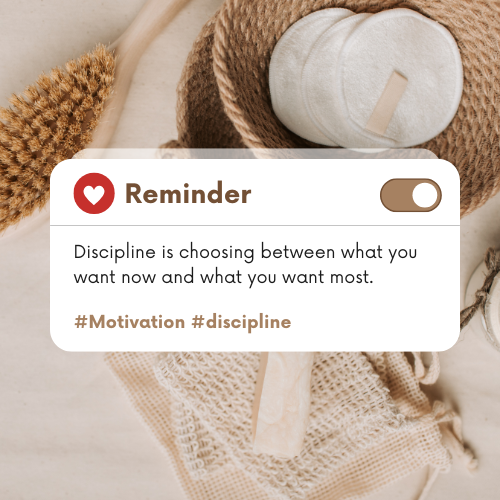
Self-discipline is often misunderstood. It is believed by many that those who are disciplined are always overflowing with motivation, energy, and focus. Actually, disciplined individuals are also capable of being lazy, tired, and lacking in motivation. The distinction between them is not in their feelings, but in their actions contrary to those feelings.
Most probably, if you often tell yourself:
# I will start tomorrow
# I am lacking motivation
# It's my own knowledge that I should do it, however, the fact is that I don't do it.
Then this blog is made for you.
We will understand here:
Self, discipline concept;
Reasons for laziness;
Stepwise, practical ways to develop self, discipline;
Keeping discipline when there is no motivation.
This is not a motivational speech. This is a practical and real guide.
"What is Self, Discipline (In Simple Words)?"
Self, discipline is a strength to do what is needed even when you feel like not doing it.
It is not:
Being extremely strict to yourself Working 24/7
Never taking a break
On the contrary,
self, discipline is:
Making small commitments to yourself
Being consistent with
these commitments
Example: Studying for
30 minutes even if you are feeling lazy
Going out for a short walk instead of lying down and scrolling through your phone
Writing one page instead of waiting for the perfect mood
Discipline is not being super intense. Discipline is being consistent.
Why Do We Feel Lazy?
Before we can think of ways to actually fix laziness, simply having to grasp the concept.
Laziness should not be considered as a sign of ill character.
Most of the time it is a result of one of these:
1.Mental Overload
If your mind is loaded with so many tasks that it cannot cope, it basically shuts down. You feel lazy but, in fact, it is your brain that is exhausted.
2. Fear of Failure
At times we choose to stay away from work because we are scared: What if I fail? What if Im not good enough? Therefore, we postpone doing what we should.
3. Lack of Clear Goals
If you are someone who always ask why and if you dont know the reason of doing something, your brain will not make an effort.
4. Dopamine Addiction
Excessive usage of a phone, social media, and instant entertainment make a real work that is hard to do and boring.
5. Poor Physical Health
Not getting enough sleep, eating unhealthily and not moving reduce your energy and focus. Knowing this is a big deal since you don't struggle with laziness by using motivation, instead, you solve the root cause.
Motivation vs Self, Discipline
Waiting for a motivation spark is what most people do. They can hardly be more wrong.
Motivation:
Short, lived Based on feelings. Can't be controlled by a person self.
Discipline:
Long, lasting Based on a systemCan be handled even when someone is having a bad emotional state
Motivation questions:
"Should I do this?"
Discipline asks:
"What is the tiniest thing I could do right now?"
Generally, motivated people achieve success. However, these people do not rely on motivation for their actions. They depend on their own systems.
Step 1: Cease Expecting the Perfect Mood
It is probably among the most significant falsehoods we convey to ourselves that:
I will commence when I be motivated.
It is actually the action that leads to motivation not vice versa.
Instead of asking:
• “Do I feel like doing this?”
Ask:
Can I do this for 5 minutes only?
It is mostly the case that the part which is the hardest is starting.
Once you start, momentum follows.
Step 2: Employ the 5-minute Rule
The 5-minute rule is a strong one.
Tell yourself:
“I’ll do this task for just 5 minutes.”
Examples:
• Study for 5 minutes
• Write for 5 minutes
• Exercise for 5 minutes
After 5 minutes:
• You can stop if you want
• Or you may continue naturally
This removes mental resistance and tricks your brain into action.
Discipline begins with starting small.
Step 3: Initially Reduce Your Standard
A lot of people who set themselves up for failure do so because they set very high and unrealistic standards.
They think:
If its not possible for me to do it perfectly, then why should I do it at all?
This leads to procrastination.
Instead:
• Bad workout > no workout
• Short study session > no study
• Imperfect work > no work
Progress beats perfection.
Step 4: Construct Identity, Based Discipline
Instead of saying:
• “I want to be disciplined”
Say:
• “I am the type of person who shows up”
Identity changes behaviour.
Examples:
• “I am a student who studies daily”
• “I am someone who takes care of my health”
• “I am consistent, even on bad days”
Each tiny gesture is like throwing a ballot for your personal identity.
Step 5: Get rid of Distractions from Your Surroundings
Self-discipline will be more likeable if your surroundings are helpful to you.
Examples:
• Keep phone away while studying
• Log out of social media
• Keep books visible
Remove junk food from your sight
Do not depend on your willpower.
Design your environment.
An environment that is disciplined works the behavior to be disciplined also.
Step 6: Build a Daily Routine That Is Simple
There is no need for a complicated schedule.
A simple routine is a way to organize your day.
Example:
• Wake up → freshen up → 30 minutes focused work
• Fixed study/work time
• Fixed sleep time
When behaviors are habitual, discipline is spontaneously done.
Step 7: Concentrate on Systems Rather Than Objectives
Objectives matter, however, systems have a greater energy.
Goal:
• “I want to score well”
System:
"I will study 45 minutes daily"
It is not possible to control the outcomes, however, the effort can be controlled.
Discipline is a matter of being there every day, rather than getting instant success.
Step 8: Track Your Progress (Visually) Tracking builds accountability.
You can:
• Mark a calendar
• Use a habit tracker
• Maintain a checklist
Progress is what really keep you going.
The rule is very straightforward:
Don't break the chain.
Step 9: Take Care of Your Body
Mind control, or mental discipline, is very much a
physical health derivative.
Basic discipline habits:
• Sleep 7–8 hours
• Drink enough water
• Eat balanced food
• Move your body daily
You cannot expect high discipline with a tired body.
Step 10: Forgive yourself, but never quit
You will fail some days.
This is normal.
Discipline does not mean never failing.
It means not quitting after failure.
Rule:
• Miss one day → okay
• Miss two days → warning
• Miss three days → habit breaks.
Always restart immediately.
How Long Does It Take to Build Self, Discipline?
One cannot put a time limit on developing self, discipline.
But generally:
• 7 days → awareness
• 21 days → habit formation
• 60–90 days → identity change
The main point to be consistent rather than to be fast.
Final Thoughts:
Having self, discipline is not a matter of being tough with oneself or miserable.
It is simply a matter of honoring your future self.
On days when you feel lazy, remember:
• You don’t need to do everything
• You just need to do something
Small moves that you do consistently each day will eventually lead to a huge change.
If you can be there for yourself when you are at your worst, then your best days will take care of themselves.
Remember:
You don’t need more motivation.
You need better systems and smaller steps.